


2026 Corolla vs. 2026 Camry Comparison
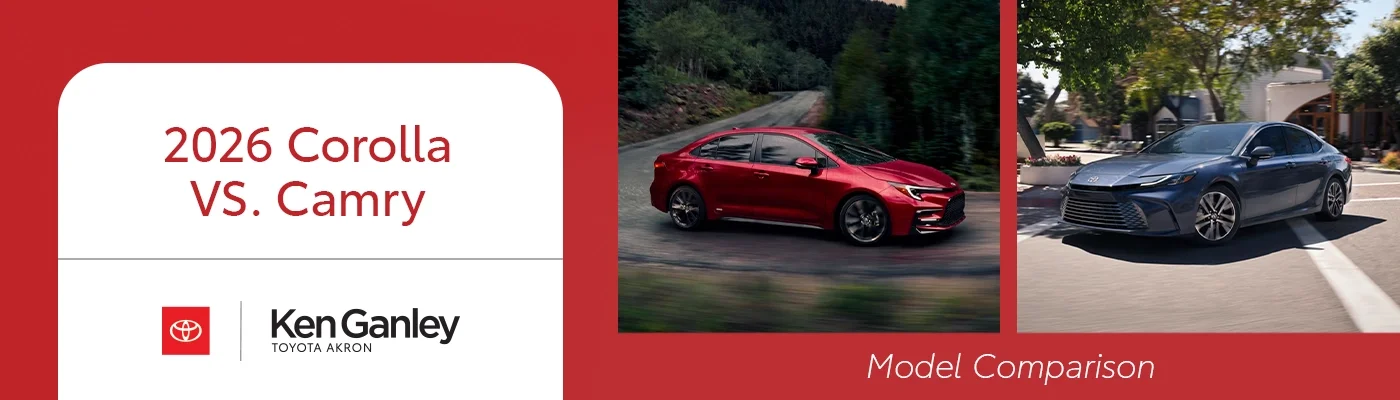
For generations, Toyota sedans have represented the highest levels of efficiency, quality, safety, technology, and innovation. Both the compact Toyota Corolla and midsize Toyota Camry have led their respective segments for decades, routinely earning praise and recognition from top critics in the industry. Although there’s no denying the advantages of each Toyota sedan, it can be difficult to decide whether the Corolla or Camry is a better fit for your lifestyle, budget, and driving preferences. Ken Ganley Toyota Akron has assembled this useful comparison guide that will help showcase the benefits of both the Corolla and Camry so you can make an informed buying decision. Let’s see whether the Corolla or Camry is a better fit for your unique needs!
Corolla vs Camry – Quick Comparison
|
|
|
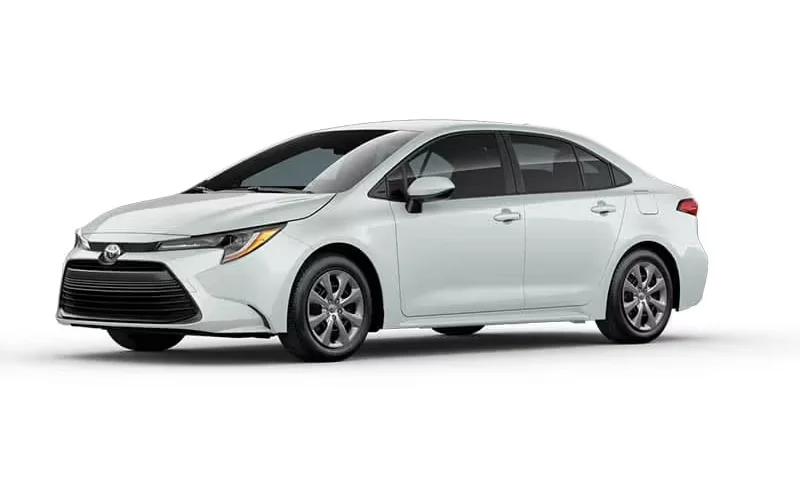
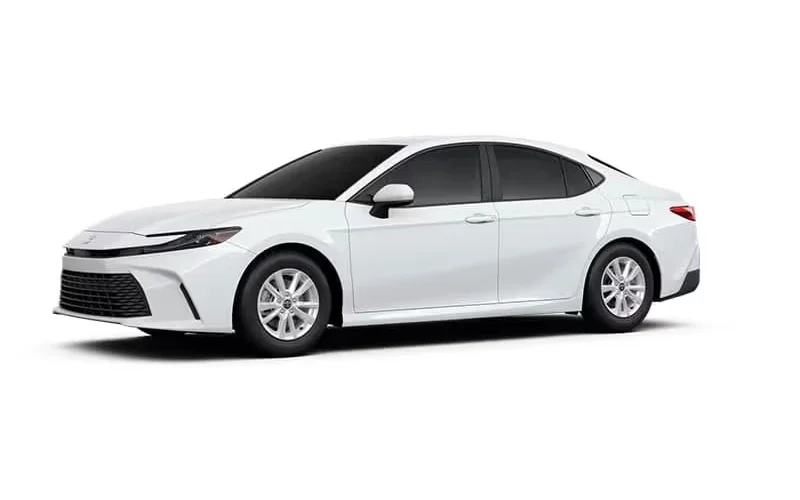
| 2026 Toyota Corolla | VS | 2026 Toyota Camry |
| $24,120 | Base MSRP* | $30,295 |
| 2.0L 4-Cylinder (169 HP / 151 LB-FT) | Standard Engine (HP/TQ) | 2.5-liter 4-Cylinder Gas/Electric Hybrid (225 HP / 163 LB-FT) |
| N/A | Available Engine (HP/TQ) | 2.5-liter 4-Cylinder Gas/Electric Hybrid (232 HP / 163 LB-FT) |
| Sedan, Hybrid Sedan, Hatchback, High-Performance Hatchback | Model Variants | Hybrid Sedan |
| 13 gallons | Fuel Tank Capacity | 13 gallons |
| 13.1 cubic feet | Trunk Cargo Volume | 15.1 cubic feet |
| 182.5 inches | Exterior Length | 193.5 inches |
| 17.8 feet | Turning Radius | 18.7 feet |
| 42.0 inches | Front Legroom | 42.1 inches |
| 34.8 inches | Rear Legroom | 38.0 inches |
One quick look at the table provided above will uncover a number of key differences between the compact Toyota Corolla and the midsize Toyota Camry. Comparing starting prices, the Corolla proves to be the more affordable option. It offers an economical gas-powered 4-cylinder engine featuring standard front-wheel drive that delivers stellar MPG ratings. Conversely, the Camry comes standard with a proven hybrid drivetrain along with your choice of both FWD and AWD for enhanced confidence. We’d also like to highlight the fact that while the Camry is currently available in a single variant, the Corolla is also available in three additional variants – the efficient Corolla Hybrid, versatile Corolla Hatchback, and the high-octane GR Corolla. No matter if you prioritize MPG, practicality, or exhilaration – both the Corolla and Camry have plenty to offer.
Shifting our focus to the dimensions of both the Corolla and Camry, it’s easy to understand the differences between them. Unsurprisingly, the smaller compact Corolla features 13.1 cubic feet of cargo space, a shorter turning circle, and shorter overall length. On the other hand, the midsize Camry offers a larger cargo capacity and longer exterior length. Despite sharing nearly identical front legroom measurements, those who routinely drive with passengers in the rear row of seats will prefer the more spacious Toyota Camry.
Corolla vs Camry - Key Standard Features
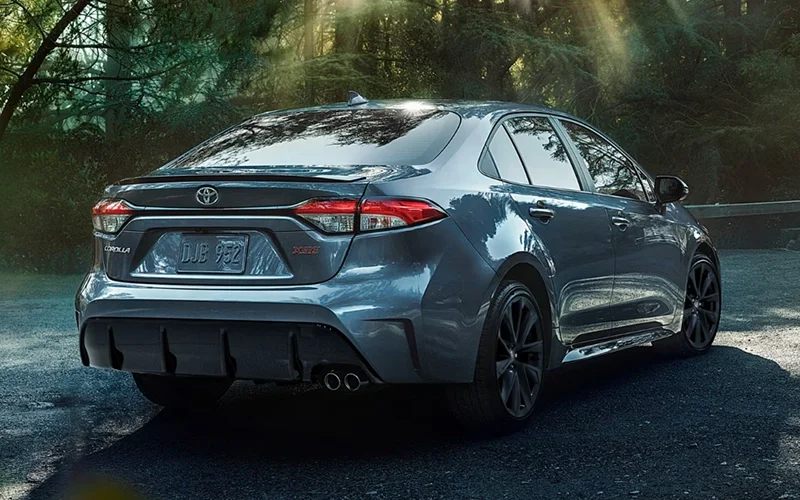
Corolla Standard Features
- LED headlights, Daytime Running Lights (DRL), taillights, and stop lights
- Color-keyed power outside mirrors
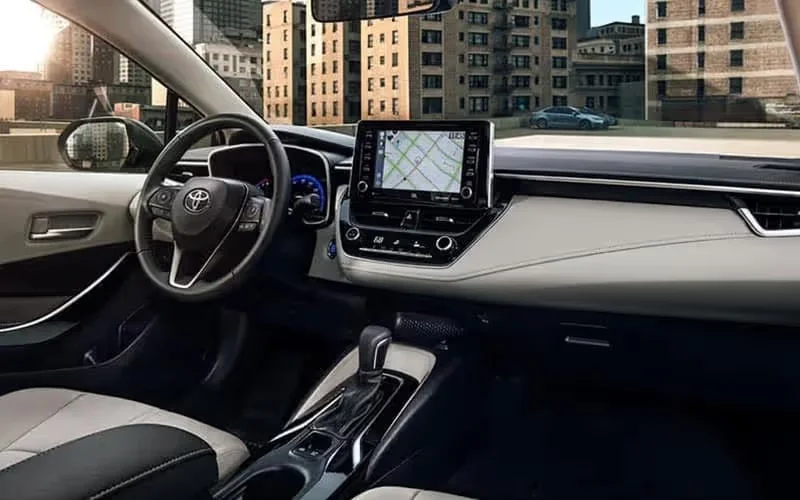
- 8-inch touchscreen and six speakers featuring wireless Android Auto™ & Apple CarPlay® smartphone integration
- Four USB-C ports
- 4.2-inch Multi-Information Display (MID)
- Toyota Safety Sense™ 3.0 (TSS 3.0)
- Star Safety System™ and ten airbags
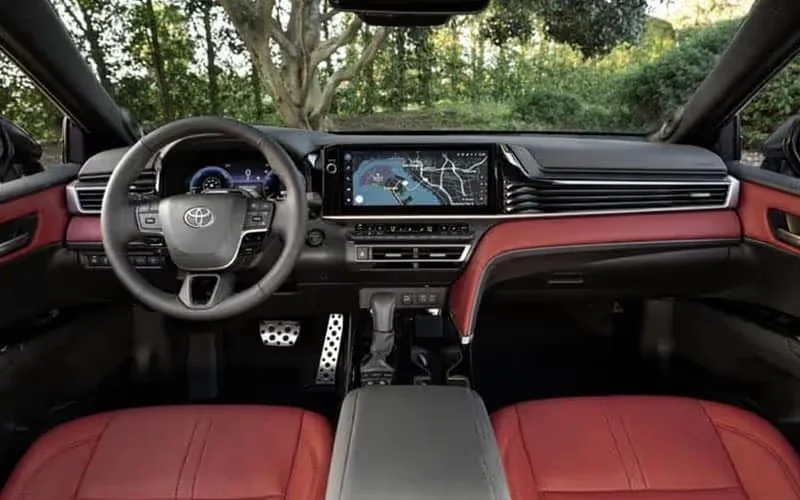
Camry Standard Features
- Bi-LED headlights with Automatic High Beams (AHB) and auto on/off
- Toyota Safety Sense™ 3.0 (TSS 3.0) and Blind Spot Monitor (BSM) with Rear Cross-Traffic Alert (RCTA)
- Qi-compatible wireless smartphone charging
- Dual zone automatic climate control with air filter, humidity sensor, and rear-seat vents
- 8-inch touchscreen and six speakers featuring wireless Android Auto™ & Apple CarPlay® smartphone integration
- 7-inch Digital Gauge Cluster with selectable gauge display screens
- Heated power outside mirrors with integrated turn signals and blind spot warning indicators
Who Should Buy the Toyota Corolla?
Corolla Standard Features
- Budget-Conscious Buyers (low starting price)
- Teen Drivers or Senior Drivers (superior maneuverability)
- City or Urban Dwellers (extensive list of active safety technologies)
- Technology Enthusiasts (impressive standard connectivity features)
Who Should Buy the Toyota Camry?
Camry Standard Features
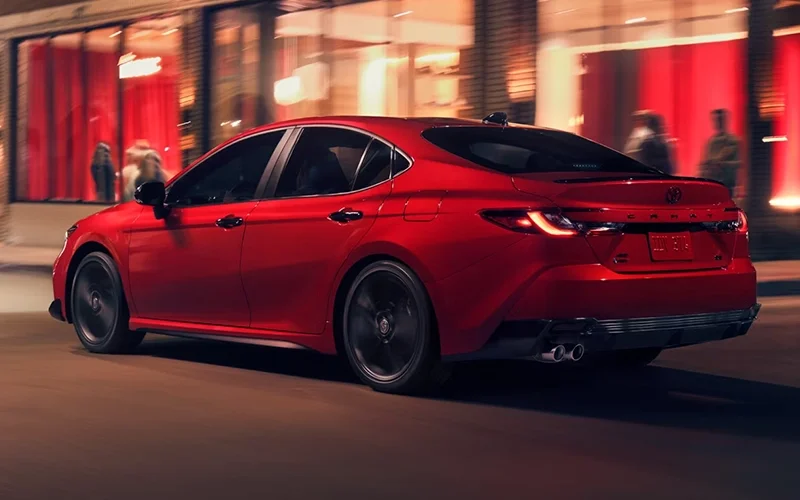
- Drivers with Long Commutes (highest MPG ratings)
- Growing Families or Rideshare Drivers (most interior space and cargo volume)
- Eco-Conscious Buyers (standard hybrid drivetrain)
- Long-Term Vehicle Owners (superb resale value and reliability)
*Starting MSRP includes the Delivery, Processing and Handling of $1,095 for Cars (Corolla, Corolla HV, Corolla HB, GR Corolla, Camry, Camry HV, Prius, Prius Prime, Toyota Crown, Mirai, GR86, GR Supra), $1,350 for Entry SUV/Small SUV (Corolla Cross, Corolla Cross HV, RAV4, RAV4 HV, RAV4 Prime, bZ4X), $1,395 for Mid SUV/Van (4Runner, Venza, Highlander, Highlander HV, Grand Highlander, Grand Highlander HV, Land Cruiser, Sienna), $1,495 for Small Pickup (Tacoma), $1,850 for Large Pickup/Large SUV (Tundra, Tundra HV, Sequoia). (Historically, vehicle manufacturers and distributors have charged a separate fee for processing, handling and delivering vehicles to dealerships. Toyota’s charge for these services is called the “Delivery, Processing and Handling” and is based on the value of the processing, handling and delivery services Toyota provides as well as Toyota’s overall pricing structure and may be subject to change at any time. Toyota may make a profit on the Delivery, Processing and Handling.) The Delivery, Processing and Handling in AL, AR, FL, GA, LA, MS, NC, OK, SC and TX may vary. The published prices do not apply to Puerto Rico and the U.S. Virgin Islands. Dealer price will vary.
**2026 EPA-estimated city / highway mileage. Actual mileage will vary. Actual MPGe will vary depending on driving conditions, how you drive and maintain your vehicle, and other factors. Battery capacity will decrease with time and use. For more information, see www.fueleconomy.gov.